Rubbish Disposal London — Recycling & Sustainability
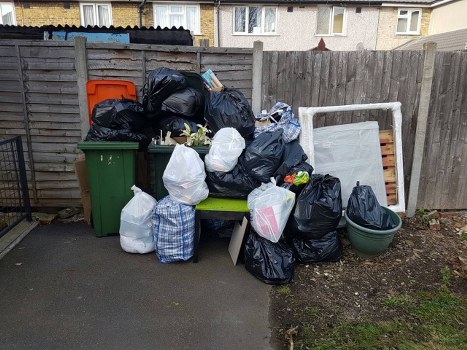 Rubbish Disposal London is committed to making urban waste management both practical and progressive. Our sustainability statement puts circularity at the heart of rubbish disposal in London, emphasising resource recovery, reduced landfill dependency and community benefit. We work across inner and outer boroughs, aligning collection and transfer activity with local council recycling schemes so that residents and businesses see real gains from separation at source. Our approach is driven by measurable targets and partnerships that increase reuse and reduce the carbon footprint of waste transport.
Across operations, London rubbish disposal is integrated with borough-level systems: many councils collect food waste separately, run glass and mixed recycling streams and use communal containers for paper and card. We tailor our services to match those systems and provide training for crews and clients so materials are routed correctly. Coordination with municipal waste policies reduces contamination and improves final recycling yields, which benefits both the environment and local economies.
 Our headline recycling percentage target is clear: we aim to achieve a 70% recycling and reuse rate by 2028 across all Rubbish Disposal London contracts. This internal target complements borough ambitions and national strategies. Hitting a 70% diversion from landfill requires operational focus, better separation, and growth in reuse channels for bulky waste, electronics and textiles — areas where London has growing charity-led infrastructure.
Local Transfer Stations and Efficient Logistics
To support waste diversion we operate with a network of local transfer stations that shorten haul distances and increase throughput to appropriate recycling facilities. Our transfer stations are located to serve north, south and central London boroughs and are selected for proximity to material reprocessors. Typical sites we use include municipal and private transfer facilities that accept segregated streams (food, garden, wood, metals, C&I recycling). By using nearby transfer hubs, rubbish removal London services reduce vehicle miles and release capacity for more frequent collections.
 Transfer station benefits include:
- Faster turnaround for mixed commercial collections and bulky household items.
- Lower contamination rates through pre-sorted drop-off points.
- Improved reporting and traceability for recycling tonnages.
We also work with borough transfer schemes where councils provide dedicated glass banks, food waste bulking sites and separate cardboard compaction, which helps us ensure materials are sent to the correct processors instead of being co-mingled.
Partnerships with Charities and Community Reuse
 A key pillar of our sustainability model is active collaboration with local charities and community groups. Rather than treating all collected items as waste, our teams identify reusable goods and arrange direct transfer to registered charities, furniture reuse organisations and clothing banks. We partner with social enterprises that accept household furniture, working electricals and textiles, and with food redistribution networks for surplus edible items. This reduces waste, supports vulnerable communities and keeps materials in productive use.
Examples of reuse pathways we support include collection routes that prioritise donationable furniture over disposal, segregated electronics drops to certified refurbishers, and clothing banks fed from commercial clear-outs. These practical steps ensure that rubbish disposal in London contributes to local social value while meeting recycling commitments.
 Low-carbon vans and green fleet complete the picture. Our fleet strategy for waste and rubbish removal London emphasises the rollout of low-emission vehicles: battery electric vans for urban collections, Euro VI hybrid units for longer runs, and efficient routing software to minimise empty miles. Each new low-carbon van reduces CO2 and air pollutant emissions in dense boroughs, aiding local air quality and aligning with London’s Ultra Low Emission Zone ambitions.
Operationally, we monitor fleet emissions, fuel-equivalent savings and vehicle utilisation to report progress against our sustainability KPIs. In parallel we run driver training programmes that reduce idling and encourage eco-driving, which can deliver immediate fuel and emissions reductions even before vehicle replacement.
We also invest in material-specific improvements: better containers for dry recyclables, sealed bins for food waste to avoid contamination, and collaboration with boroughs to refine kerbside sorting. Bold steps like these, combined with our 70% recycling and reuse target, create a framework where rubbish disposal in London is both reliable and regenerative.
Our commitment is simple — to deliver London rubbish disposal services that prioritise reuse, maximise recycling, and minimise carbon impact while supporting local partners and borough waste strategies. By bringing together transfer station efficiency, charity partnerships and a low-carbon van fleet, we build a resilient system that serves residents, businesses and the environment.