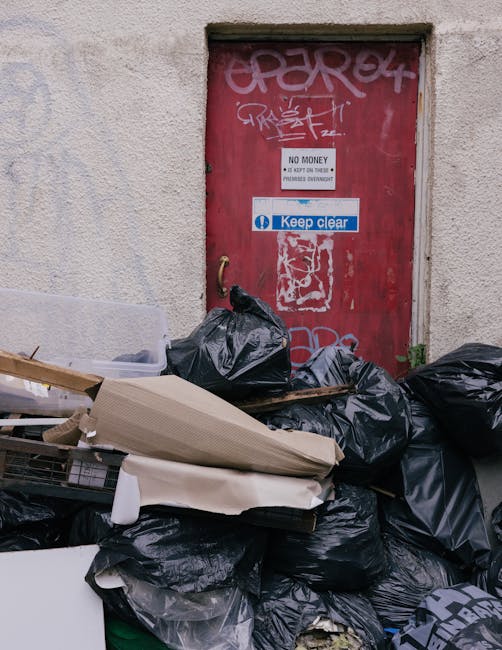
Reduce rubbish clearance costs for London stair-access flats
If you live in a London flat with stair access only, rubbish clearance can feel oddly expensive for something that should be straightforward. The reality is simple: every extra flight of stairs, awkward landing, heavy item, and tight parking spot can add time, labour, and hassle. And in London, hassle tends to cost money.
This guide shows you how to reduce rubbish clearance costs for London stair-access flats without cutting corners or creating a mess in the stairwell. You will learn what drives the price up, how to prepare properly, which choices actually save money, and where people often overspend for no good reason. A bit of planning goes a long way here. Truth be told, sometimes the biggest saving is just avoiding one unnecessary trip up and down the stairs.
Whether you're clearing a flat after a move, dealing with old furniture, or finally tackling years of clutter, the aim is the same: keep the job safe, legal, and efficient, while paying only for the work you really need.
Practical summary: stair access usually means more labour, more time, and more risk of damage; the best way to cut costs is to sort waste properly, explain access clearly, and choose a clearance method that matches the volume and type of rubbish.
Table of Contents
- Why reducing rubbish clearance costs matters
- How stair-access flat clearance works
- Key benefits and practical advantages
- Who this is for and when it makes sense
- Step-by-step guidance
- Expert tips for better results
- Common mistakes to avoid
- Tools, resources and recommendations
- Law, compliance, standards and best practice
- Options, methods and comparison
- Case study or real-world example
- Practical checklist
- Conclusion
- Frequently asked questions
Why Reduce rubbish clearance costs for London stair-access flats Matters
Stair-access flats are a different kind of clearance job. There is no lift to speed things up, no easy ground-floor pickup, and often no generous loading bay outside. That means the work takes longer and requires more care. In London, where parking restrictions and narrow streets already make things fiddly, even a small clearance can become a logistical puzzle.
Why does that matter? Because the final price is usually shaped by more than the pile of rubbish itself. A company may need extra crew, more time on site, careful carrying down shared stairs, and possibly a longer walk from van to building. If the flat is on the third or fourth floor, or the hallway is awkwardly narrow, the effort can increase again. You are not just paying for removal; you are paying for handling, access, and coordination.
There is also the issue of neighbours and building management. A rushed clearance can annoy everyone in the block if items are dragged, banged, or left in the communal area. That is avoidable, but only if the job is planned properly. Saving money is not only about the invoice. It is about keeping the whole thing smooth, quiet, and contained. Nobody wants a mattress blocking the landing at 8am. Not ideal.
For many London residents, the real goal is predictability. You want to know what will be taken, how long it will take, and what you can do to stop the bill creeping upwards. That is exactly where a practical, well-prepared approach pays off.
How Reduce rubbish clearance costs for London stair-access flats Works
At a basic level, rubbish clearance is priced around volume, labour, disposal, and access. For stair-access flats, access is the part that often changes everything.
Here is what typically happens during a clearance:
- The job is assessed using photos, a description, or a site visit.
- The team estimates how much waste there is and how difficult it will be to move.
- They factor in stairs, floor level, parking distance, item weight, and time on site.
- The waste is removed, loaded into a vehicle, and taken to an authorised disposal or transfer point.
- Reusable or recyclable items may be separated where possible, depending on the operator and the nature of the load.
That sounds straightforward, but the pricing can shift if the reality on the day does not match the description. A flat that looked easy in photos may turn out to have a very narrow staircase, no lift, and three oversized wardrobes that need careful turning on a landing. You can see how this happens. One wrong assumption and the job becomes slower, more awkward, and more expensive.
To reduce rubbish clearance costs for London stair-access flats, the key is to make the job more predictable before anyone arrives. The less uncertainty there is, the less chance of surprise labour charges or unnecessary vehicle time. Clear photos, honest descriptions, and accurate waste sorting are a big part of that.
It also helps to understand the difference between mixed rubbish and sorted materials. A pile containing old furniture, bagged general waste, and a few electrical items is usually more efficient to deal with than a lot of loosely mixed debris. The more organised your waste, the easier it is to quote and clear efficiently.
Key Benefits and Practical Advantages
Saving money is the obvious benefit, but it is not the only one. A well-managed clearance brings several practical advantages that matter just as much in a London flat.
- Lower labour time: fewer trips, fewer delays, and less effort carrying items down stairs.
- More accurate pricing: better information at the start usually means fewer awkward surprises later.
- Reduced damage risk: careful planning lowers the chance of scuffs, chips, or stairwell incidents.
- Less disruption to neighbours: a tidy, organised job is quieter and less stressful for everyone in the building.
- Better disposal efficiency: sorted items can sometimes be handled more smoothly than mixed loads.
- Faster turnaround: especially helpful if you are moving out, preparing a flat for sale, or meeting a deadline.
There is also a psychological benefit, if that is the right word. Clutter in a stair-access flat can feel strangely oppressive because every item has to be carried past the same narrow corners and same slightly battered bannister. Once it is gone, the whole place feels lighter. Airier, somehow. Less annoying, too.
And let's be fair, cost savings are even better when they do not compromise the quality of the job. The aim is not to choose the cheapest possible option on paper. It is to choose the option that clears the rubbish properly without paying for wasted effort.
Who This Is For and When It Makes Sense
This approach is useful for a wide range of people in London, especially where access is awkward and every minute matters.
- Private tenants clearing rubbish before moving out and trying to avoid costly last-minute fees.
- Landlords dealing with leave-behind items, end-of-tenancy clutter, or small clear-outs between lets.
- Homeowners in maisonettes, converted flats, or upper-floor properties with no lift.
- Letting agents arranging clearances between occupancy changes.
- Estate managers or block residents handling bulky items that cannot be left in shared spaces.
- Anyone tackling a renovation where waste is building up quicker than expected.
It makes sense whenever the waste is too much for normal bin collection, too bulky for simple DIY disposal, or too awkward to move without help. It also makes sense if you value your own time. Carrying heavy waste down multiple flights of stairs is not exactly a fun weekend hobby.
A small flat can still generate a surprisingly big clearance job. One sofa, a broken wardrobe, a few bin bags, and some packaging can become a real liftless headache. If that sounds familiar, you are the sort of person this guide is for.
Step-by-Step Guidance
If you want to reduce rubbish clearance costs for London stair-access flats, the smartest thing you can do is prepare the job before the van arrives. Here is a practical process that works in real life, not just on paper.
1. Sort the waste into clear groups
Start by separating items into broad categories: general rubbish, furniture, recyclable materials, electricals, and anything potentially hazardous. Do not leave everything in one mixed pile if you can avoid it. Mixed waste is harder to quote and slower to clear.
If you have bagged household rubbish, keep it together. If you have furniture, keep it accessible. If you have a couple of items that might need special handling, flag them early. The cleaner the picture, the easier the pricing.
2. Measure the awkward bits
Stair-access flats often come with a few tricky dimensions. Measure large items if they need turning through doors, hallways, or on stair landings. A few centimetres can decide whether something can be carried safely or needs to be dismantled.
This matters more than people expect. A wardrobe that seems fine in the room can suddenly become a menace on the stairs. A quick tape measure can save a lot of swearing later. Not that anyone swears, of course.
3. Take clear photos
Take photos of the waste from several angles, plus the staircase, hallway, and any tight points. Include the front door, entrance path, and parking situation if relevant. Good photos help the clearance team estimate labour and time more accurately.
Bad photos create guesswork. Guesswork creates problems. You can see the chain reaction.
4. Explain access honestly
Be upfront about the floor level, the number of flights, the width of the stairs, and whether there is space to pause safely. If parking is difficult, say so. If the van cannot stop right outside, mention that too. The more honest you are, the better the quote will be.
5. Ask what is included in the price
Some quotes may include labour, loading, and disposal. Others may have add-ons if access is harder than expected, if the load is mixed, or if extra dismantling is needed. Ask what is covered before you book. A quick question now beats a frustrating conversation later.
6. Decide what you can remove yourself
If you can safely move small, light items to the kerbside or a ground-floor area without causing trouble, that may reduce labour time. Only do this if it is permitted and safe. Do not block stairwells, exits, or communal spaces. That is asking for trouble.
7. Book at a sensible time
If possible, choose a time when access is easiest and the building is quiet. Mid-morning on a weekday may be simpler than squeezing the job between school runs, deliveries, and bin collection day. Small timing choices can make a bigger difference than you'd think.
8. Keep the route clear
On the day, make sure the path from the flat to the exit is free of obstacles. Doorways should open properly, and stair landings should not be cluttered. If a shared hallway is involved, warn neighbours if needed and keep the noise down. A smoother route means faster work and less risk of accidental damage.
Expert Tips for Better Results
Here is the part that tends to save the most money over time: small, sensible decisions made before the clearance starts.
Tip 1: Dismantle what you safely can. Flat-pack furniture, bed frames, and some shelving units are often cheaper to clear when broken down into manageable pieces. The goal is to reduce labour time without making the waste messier.
Tip 2: Separate heavy items from light ones. A mixed pile with one heavy item buried underneath can slow everything down. If the crew can reach the bulky items quickly, the job tends to flow better.
Tip 3: Keep electronics apart where possible. Old kettles, monitors, microwaves, and similar items are easier to discuss when they are identified clearly. That helps avoid confusion and misquoting.
Tip 4: Avoid overfilling bags. Overstuffed bin bags split easily on stairs, which creates a mess and wastes time. Better to use a few sturdy bags than one heroic monster bag that collapses halfway down the stairs.
Tip 5: Be realistic about access. If the staircase is steep, narrow, or shared, say so. In our experience, people sometimes underplay the awkward bits because they assume it will sound like a complaint. It is not a complaint. It is useful information.
Tip 6: Ask for a quote based on photos and clear descriptions. That does not guarantee a fixed price in every case, but it usually gives a better starting point than a vague "there's a bit of stuff" message. Bit of stuff? That phrase causes more trouble than it solves.
Tip 7: Bundle clearances where sensible. If you are already having furniture removed, it may be cheaper to include the bagged waste at the same time rather than arranging two separate visits. That said, only bundle items if it genuinely makes logistical sense.
Tip 8: Think about the route out, not just the pile. The staircase, hallways, door frames, parking, and street access all affect time. The waste itself is only half the picture.
Common Mistakes to Avoid
People usually do not overspend because they are careless. More often, they overspend because they underestimate the job. That happens all the time in London stair-access flats.
- Giving vague descriptions: "a few bags and some furniture" may be true, but it is not very helpful.
- Ignoring access issues: stairs, narrow landings, and parking restrictions should never be left out.
- Leaving everything until the last minute: rushed bookings often mean poor preparation and higher costs.
- Mixing special items with normal waste: this can slow sorting and complicate disposal.
- Assuming all companies price the same way: some charge differently for labour, access, and disposal.
- Trying to save money by overloading communal areas: that can create complaints and safety issues.
- Not checking what happens to the waste: you should at least know that it is being handled properly and legally.
One common trap is thinking, "It's only one floor, how hard can it be?" Then the sofa catches on the turn in the stairwell, the landing is too tight, and suddenly there is a team of people negotiating geometry like it is a military exercise. Better to plan properly from the start.
Tools, Resources and Recommendations
You do not need specialist kit to prepare for a rubbish clearance, but a few simple tools make a big difference.
- Tape measure: useful for checking bulky furniture against stairwells and door frames.
- Phone camera: take clear photos of the items and access route.
- Marker pen and labels: helpful if you are sorting items into keep, donate, recycle, and remove.
- Strong bin bags: choose sturdy bags that will not split under their own enthusiasm.
- Gloves and basic protective gear: useful if you are moving lighter items yourself.
- Notepad or checklist: good for noting which rooms still contain items to be cleared.
For London residents, it is also worth checking your building rules before moving waste through communal areas. Some blocks have restrictions on timing, noise, or use of service entrances. Even when there is no formal rule posted, being considerate helps keep the process smooth.
If you are comparing services, look closely at what the quote includes: labour, loading, access challenges, disposal, and any dismantling. The cheapest headline price is not always the cheapest overall. Sometimes it is just the one with the most awkward fine print. Classic.
If you want to compare rubbish removal options more broadly before booking, you may find it useful to review house clearance options for larger flats and full properties. For smaller, more routine uplift needs, a man and van collection can sometimes be a practical fit when access and load size are modest.
Law, Compliance, Standards and Best Practice
Clearance work in London should always be handled carefully and legally. You do not need to be a legal expert, but you should know the basics.
Duty of care matters. Waste should be passed to a properly authorised operator and taken to a legitimate disposal route. If someone offers a suspiciously cheap service and cannot explain where the waste goes, that is a red flag. In practice, the lowest quote can become the most expensive choice if waste is dumped improperly and traced back to you.
Do not use shared areas carelessly. Stairwells, landings, and exits must remain safe. Items should not block fire routes or create trip hazards. If you are moving waste yourself before a clearance, keep the route clear and avoid leaving bags in communal spaces for longer than necessary.
Watch for special waste streams. Electrical items, fridges, mattresses, and certain bulky items may require different handling. You do not need to memorise every rule, but you should flag these items when asking for a quote. That keeps the job accurate and reduces the chance of delays.
Use safe manual handling. Heavy lifting down stairs is where things go wrong quickly. Good carriers use proper technique, teamwork, and pacing. If a job feels too heavy for one person, it probably is. No medal for heroic strain injuries.
Check building and landlord requirements. Some London blocks have access rules, booking windows, or expectations around waste movement. If you rent, it can be worth checking your tenancy agreement before organising a clearance. Simple but helpful.
The best practice here is not complicated: be honest about the job, keep it safe, and make sure waste is handled through lawful channels. That protects you, the building, and everyone involved.
Options, Methods and Comparison
There are several ways to deal with rubbish in a stair-access flat. The right one depends on how much you have, how heavy it is, and how difficult the building is to access.
| Method | Best for | Cost control | Pros | Trade-offs |
|---|---|---|---|---|
| Full clearance service | Large, mixed, or awkward loads | Good if access is described well | Fast, convenient, suitable for heavy items | Can cost more if the job is poorly prepared |
| Partial or single-item removal | One sofa, mattress, appliance, or a few bulky items | Often better for smaller jobs | Simple, targeted, less wasteful | Not ideal for many mixed items |
| Self-sorting before collection | People who have time and can organise waste | Usually helps reduce labour time | Cleaner quotes, quicker loading | Requires effort and careful handling |
| DIY trip to the tip | Very small loads and those with transport | Can be cheaper in cash terms | Direct control over the process | Time-consuming, physically hard, not always practical in London |
For stair-access flats, DIY disposal can look tempting until you factor in parking, carrying, fuel, congestion, and your own time. Sometimes it is cheaper in pounds but more expensive in life. There is a point where paying for the convenience is simply the sensible move.
If the job is modest, a targeted collection may be enough. If the flat has accumulated years of clutter, a larger clearance is often more efficient because everything can be done in one visit. The right choice depends on your access, volume, and deadline.
Case Study or Real-World Example
A typical London stair-access flat clearance might involve a second-floor maisonette, no lift, and a mix of items: a broken bed frame, a chest of drawers, a few black bags, packaging from a recent move, and an old monitor. The first instinct is often to think, "That's not much." Then you stand on the narrow stair landing with the drawers halfway out and realise the building has other opinions.
In a case like that, the best savings usually come from preparation rather than negotiation. The resident can:
- break down the bed frame in advance,
- separate the monitor and small electrical items,
- bag the loose rubbish properly,
- take photos of the stairwell and the parking arrangement,
- and share honest details about access before the booking.
That small amount of effort often makes the quote more accurate and the removal quicker on the day. Instead of spending time figuring out what is where, the team can get straight to work. The result is usually cleaner, calmer, and less expensive than a last-minute, everything-in-a-pile approach.
Another common scenario is an end-of-tenancy clearance where the flat is on the top floor and the last item is a sofa that barely fits through the hallway. If the resident has already measured the sofa and warned the team about the stair turn, the job can be planned. If not, the crew may need extra time or dismantling. Same flat, same sofa, very different price behaviour. That is the game, basically.
Practical Checklist
Use this checklist before you book or schedule a clearance.
- Sort rubbish into general, furniture, recyclable, electrical, and special items.
- Take clear photos of the waste and the access route.
- Measure bulky items and tight stair turns.
- Count the number of flights of stairs.
- Check whether parking or loading is difficult.
- Explain any communal access rules or time restrictions.
- Ask what the quote includes and whether labour is covered.
- Remove anything you want to keep before the clearance starts.
- Keep stairwells, landings, and exits clear.
- Confirm that the waste will be handled legally and responsibly.
Quick reminder: accurate information is one of the easiest ways to reduce rubbish clearance costs for London stair-access flats. It sounds obvious, but people skip it all the time.
Conclusion
Stair-access flats in London bring their own set of clearance headaches, but they do not have to bring inflated bills with them. If you sort waste properly, explain access clearly, and choose the right type of collection, you can keep costs under control without making the day harder than it needs to be.
The main thing to remember is that the price is not just about the rubbish. It is about stairs, time, handling, safety, and how much guesswork the job creates. Reduce the guesswork and you reduce the cost. Simple, really. Not always easy, but simple.
If you are planning a clear-out, take ten minutes to prepare before you book. Those ten minutes can save a lot more than money. They can save stress, delays, and the slightly grim experience of watching a heavy item wedge itself on the stair turn.
Get a free quote today and see how much you can save.
Frequently Asked Questions
Why are rubbish clearance costs higher for stair-access flats in London?
Because the job usually takes more labour, more time, and more care. Stairs, narrow landings, and difficult parking all increase the effort involved, which can affect the price.
How can I reduce rubbish clearance costs for London stair-access flats before the team arrives?
Sort the waste, take clear photos, measure large items, explain access honestly, and remove anything you want to keep. Better preparation usually means a more accurate and lower-risk quote.
Is it cheaper to dismantle furniture myself first?
Often, yes, if you can do it safely. Breaking down bed frames, shelving, or flat-pack furniture can reduce labour time and make loading easier. Just do not create extra mess or damage in the process.
Do I need to tell the company about every flight of stairs?
Yes. The number of flights matters because it affects labour and timing. Leaving it out can lead to an inaccurate quote or a difficult conversation on the day.
What if I only have a few bin bags and one bulky item?
That can still be worth booking, especially if the bulky item is awkward to carry downstairs. A small job can become costly if access is poor, so it helps to get a proper quote based on the actual situation.
Can I leave rubbish in the communal hallway before collection?
Usually not for long, and it may breach building rules or create a safety issue. Keep communal areas clear and move items only when the collection is due.
What kinds of items usually increase the cost?
Heavy furniture, mattresses, electrical items, mixed waste, and anything awkward to manoeuvre through stairwells can increase the effort involved. Access difficulties are often just as important as the items themselves.
Is DIY rubbish removal always cheaper?
Not always. Once you add transport, parking, time, and the physical effort of carrying waste down stairs, DIY can become less practical than it first appears.
How do I know if a quote is fair?
Compare what is included: labour, disposal, access difficulty, and whether the price is based on clear photos or a site visit. A quote that reflects the real job is usually more reliable than the cheapest headline price.
What should I tell the clearance team when I book?
Tell them the floor number, number of stairs, whether there is a lift, how much rubbish you have, whether items are bulky, and whether parking is awkward. Honest detail helps them plan properly.
Can recycling help lower the cost?
Sometimes it can, depending on how the provider handles sorting and disposal. At the very least, separating recyclable or reusable items makes the job cleaner and easier to assess.
What is the biggest mistake people make with stair-access flat clearances?
The biggest mistake is underestimating the access problem. People often focus on the amount of rubbish and forget the stairs, the landing turns, and the carrying time. That is where costs creep up.