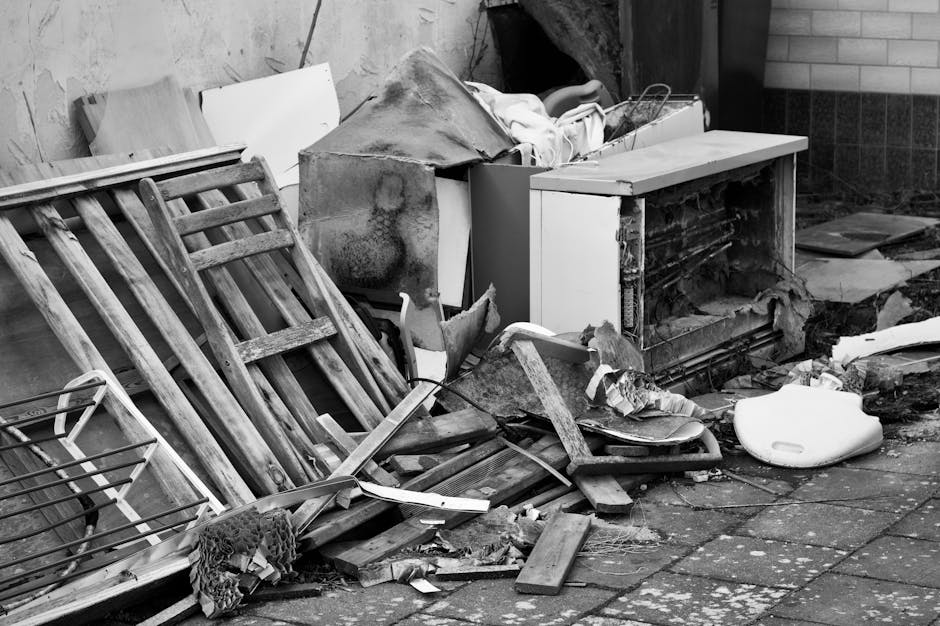
Avoid council fines when disposing of large furniture in London
If you are trying to get rid of a sofa, wardrobe, bed frame or bulky office desk in London, the process can be deceptively simple at first glance. Put it outside, wait for collection, job done - except that's exactly where people get caught out. One missed rule, one careless placement, or one unlicensed collector, and you could end up facing a council fine, extra charges, or a very annoying mess on the pavement at 7am. Not ideal.
This guide explains how to avoid council fines when disposing of large furniture in London, what councils typically expect, and the practical steps that help you stay on the right side of the rules. It also covers when a professional furniture clearance service makes more sense, how to compare disposal options, and what to check before anyone takes your bulky item away.
Truth be told, most people do not mean to break any rules. They just want the old furniture gone before the weekend. The good news? A bit of planning goes a long way.
Table of Contents
- Why Avoid council fines when disposing of large furniture in London Matters
- How Avoid council fines when disposing of large furniture in London Works
- Key Benefits and Practical Advantages
- Who This Is For and When It Makes Sense
- Step-by-Step Guidance
- Expert Tips for Better Results
- Common Mistakes to Avoid
- Tools, Resources and Recommendations
- Law, Compliance, Standards, or Best Practice
- Options, Methods, or Comparison Table
- Case Study or Real-World Example
- Practical Checklist
- Conclusion
- Frequently Asked Questions
Why Avoid council fines when disposing of large furniture in London Matters
Large furniture is one of the most common problem items in city waste streams because it is awkward, heavy, and rarely fits neatly into a normal household bin routine. In London, that matters even more. Pavements are shared, space is tight, and councils are understandably strict about items left in public areas without permission.
It is not just about the fine, either. Poor disposal can create trip hazards, block access for pedestrians or neighbours, and attract complaints very quickly. A sofa dumped by a communal entrance can become everyone's problem within minutes. And once a report is made, the item may be investigated as fly-tipping or unlawful waste placement, depending on the circumstances.
There's also the trust issue. If you hand furniture to the wrong person, or to a van that looks "a bit unofficial", you may not know where it ends up. If it is later found dumped somewhere else, the trail can come back to you. That is the part many people don't think about until later. Slightly grim, but true.
Practical takeaway: the safest route is to treat large furniture disposal like a small logistics task, not a quick throwaway job. Check the collection method, keep proof of what happened, and only use services you can verify.
How Avoid council fines when disposing of large furniture in London Works
There is no single London-wide "furniture rule" that fits every street and every borough. Instead, the process usually depends on local council arrangements, whether the furniture is being left for a council collection, taken to a reuse or recycling route, or removed by a licensed waste carrier. That is why people sometimes get confused. The same sofa can be handled legally one way in one place and very differently in another.
In practical terms, avoiding fines comes down to a few core principles:
- Do not place bulky furniture on the street unless the council or landlord has specifically allowed it.
- Use an approved collection method where possible.
- Make sure the item is collected from the correct location and at the correct time.
- Keep evidence of booking, payment, or handover.
- Check that anyone removing waste is properly authorised to do so.
For many London households and businesses, a professional service is the simplest route because it reduces the risk of a paperwork mistake or a missed collection slot. Services such as furniture disposal and furniture clearance are designed for items that are too bulky for ordinary waste routines and need careful handling.
A useful way to think about it: if the item could cause a complaint, block access, or look like dumped waste if left alone, it deserves a proper disposal plan. No drama. Just sensible admin.
Key Benefits and Practical Advantages
Getting furniture out of your home or premises the right way does more than prevent a council penalty. It can save time, reduce stress, and make the whole space easier to use again. That sounds obvious, but when you are staring at an old sofa in a narrow hallway, the benefit feels very real.
- Lower risk of fines: you avoid accidental fly-tipping or incorrect placement on public land.
- Less disruption: a planned collection is usually faster and less chaotic than improvising on the day.
- Safer movement: large items are easier to remove when there is a proper team and equipment.
- Better recycling outcomes: furniture can often be sorted for reuse or material recovery rather than treated as mixed rubbish.
- More predictable costs: quoting in advance helps you avoid surprise charges from last-minute fixes.
For landlords, letting agents, office managers, and people clearing a flat between tenancies, the biggest benefit is certainty. You know who is taking the item, when they are taking it, and what happens next.
That peace of mind is worth something. Probably more than people admit.
Who This Is For and When It Makes Sense
This guidance is useful for anyone disposing of a bulky item in London, but especially for people in situations where timing and compliance matter. You might need it if you are:
- moving out of a flat and need furniture gone before handover;
- clearing a house after renovation or a tenancy change;
- emptying a loft, garage, or spare room filled with old furniture;
- managing office furniture replacement or workspace reconfiguration;
- dealing with inherited furniture after a bereavement;
- trying to keep communal areas clear in a block of flats;
- removing mixed bulky items alongside other waste.
It also makes sense if your building is awkward to access. London basements, top-floor walk-ups, tight stairwells, controlled parking zones, and shared entrances can all turn a simple sofa removal into a mini operation. Lets face it, many homes here were not designed with sectional wardrobes in mind.
If you are clearing more than one room, you may want to look at broader services like home clearance, flat clearance, or house clearance, depending on the size of the job.
Step-by-Step Guidance
Here is a practical way to handle large furniture disposal without stumbling into a council issue.
- Identify the item properly. Is it one chair, one wardrobe, or several pieces bundled together? The category matters because some councils and services treat bulky collections differently.
- Check the local position. Look at your borough's bulky waste arrangement or building rules. If you live in a managed block, the landlord or managing agent may have separate requirements.
- Decide whether reuse is possible. If the furniture is clean and usable, donation or resale may be an option. That route reduces waste and may be cheaper, but it still needs to be practical.
- Book the right collection method. If using a professional service, make sure the provider can collect from your exact location and handle stairs, parking, or timed access.
- Keep furniture inside until collection time. Do not move it to the pavement early "just in case". That is one of the easiest ways to trigger a complaint.
- Ask for confirmation. A booking reference, receipt, message, or written agreement is worth keeping. It helps if there is ever a question later.
- Prepare the route out. Clear hallways, protect walls if needed, and measure awkward corners. A little prep can save a lot of bumping and cursing.
- Check the aftermath. Once the item is gone, make sure nothing has been left behind - screws, broken chair legs, packaging, or stray foam.
If you are arranging a broader waste collection at the same time, a general waste removal service may be the neater option, especially when bulky furniture is only part of the load.
Expert Tips for Better Results
A few small habits make a surprisingly big difference. In our experience, the people who avoid problems most reliably are not necessarily the ones with the biggest budget. They are simply the ones who plan one step ahead.
Measure before you move
Measure the item and the route out of the property. A wardrobe that looks manageable in a bedroom can suddenly become a nightmare in a narrow stairwell. Doorways, lifts, bannisters, and hallway turns all matter.
Choose the right timing
If your street is busy in the morning, a collection at the wrong hour can lead to delays or neighbour complaints. A quieter slot can make access easier and reduce pressure on everyone involved. Funny how a ten-minute timing difference can save a lot of awkwardness.
Keep proof of collection
Take a quick photo before and after if necessary, especially if the item is being collected from a communal area or handed to a third party. That small step can protect you if someone later says the furniture was left out improperly.
Ask about recycling and reuse
Not all furniture needs to go straight to disposal. Depending on condition and material, some items can be routed for reuse or component recovery. If sustainability matters to you, look at a provider's recycling and sustainability approach before booking.
Use a service with clear policies
A provider that is open about safety, payments, complaints, and procedures usually gives you a better overall experience. It may sound basic, but clear policies are often a good sign that the company takes its responsibilities seriously. You can also review practical pages such as health and safety information, insurance and safety, and pricing and quotes before making a decision.
Common Mistakes to Avoid
This is the section that saves people money. Most problems are not dramatic; they are just small oversights that snowball.
- Leaving furniture on the pavement too early. If it is outside before the agreed collection time, it may be treated as abandoned waste.
- Using an unlicensed or unclear collector. If someone removes your furniture and dumps it elsewhere, the responsibility can come back to you.
- Assuming "someone will take it". That approach often leads to half-finished arrangements and items sitting around for days.
- Forgetting about access issues. Tight staircases, parking restrictions, and building rules can delay or derail a collection.
- Not checking managed property rules. Flats and estates often have extra instructions about where bulky items may be stored or presented.
- Mixing furniture with unsuitable waste. Some items need separate handling, especially if damaged, contaminated, or partly dismantled.
- Skipping written confirmation. A quick message or email is better than relying on memory. Memory is a slippery thing when life gets busy.
One of the most common mistakes in London is thinking that the council will simply "sort it out later." Sometimes they do. Sometimes they issue a warning or charge, and occasionally the item becomes a shared problem for neighbours. Better not to gamble on that.
Tools, Resources and Recommendations
You do not need specialist equipment to dispose of large furniture properly, but a few simple tools can make the job much smoother.
- Tape measure: useful for doorways, stairs, lifts, and large furniture dimensions.
- Phone camera: handy for records before collection and proof after the item has been removed.
- Gloves and protective footwear: sensible for any manual movement, especially when handling broken frames or sharp fittings.
- Blankets or floor protection: useful if furniture is being moved through a lived-in property.
- Booking confirmation: keep it somewhere you can find quickly, not buried in a hundred emails.
If you want a straightforward starting point, the most useful resources are usually the provider's own pages on service scope, safety, and support. For example, a company's about us page can help you understand who you are dealing with, while contact us should make it easy to ask about access, timing, or special items. If you need help with an entire property rather than a single item, loft clearance or garage clearance may be more efficient than booking separate visits.
For businesses, especially offices replacing desks, storage units, or meeting room furniture, it can be worth looking at a dedicated office clearance or business waste removal option so compliance and scheduling are handled properly.
Law, Compliance, Standards, or Best Practice
Without getting overly legal about it, the main point is straightforward: once furniture is waste, it needs to be managed responsibly. In London, that usually means following the applicable council rules, the property rules for your building, and any obligations tied to the collector you use. Councils may enforce against items left unlawfully in public spaces, so "I was only moving it later" is not much of a defence if the item is already causing a problem.
Best practice usually looks like this:
- Use a recognised disposal or clearance route.
- Do not place large items on public land without permission.
- Keep access routes clear for residents and emergency use.
- Check that the collector can lawfully carry the waste.
- Retain evidence of the arrangement and the handover.
If you are comparing providers, it is reasonable to ask about safety standards, handling methods, payment security, and complaint handling. Pages such as payment and security, terms and conditions, and complaints procedure can be useful indicators of how organised and accountable a company is.
And one more thing: if a price sounds oddly low, pause for a moment. It may be fine. Or it may be the kind of quote that turns expensive once loading, access, or disposal is added. Sometimes cheap is just cheap. Not always a bargain.
Options, Methods, or Comparison Table
Different disposal methods suit different situations. The right choice depends on the item's condition, how quickly it needs to go, and how much access complexity you have.
| Method | Best for | Pros | Watch-outs |
|---|---|---|---|
| Reuse / donation | Clean, usable furniture | Can reduce waste and may be low-cost | Not suitable for damaged, unsafe, or heavily worn items |
| Council bulky waste collection | Households with items that fit council rules | Familiar process, often simple when slots are available | Booking rules vary; items left out early may still cause issues |
| Professional furniture clearance | Single items, multiple items, awkward access, time-sensitive jobs | Convenient, quicker, less lifting for you | Costs more than doing it yourself in some cases |
| Self-transport to a waste site | People with suitable vehicle access and time | Direct control over timing | Parking, loading, and site rules can be fiddly |
For many London residents, professional collection ends up being the least stressful choice, especially in flats or busy streets. If you only have one item and plenty of access, another route may be fine. The key is matching the method to the real-world situation, not the ideal one.
Case Study or Real-World Example
A common London scenario goes like this: a tenant is moving out of a two-bedroom flat and needs a sofa, coffee table, and two bookcases removed before the inventory check. The flat is on the third floor, there is no lift, and the entrance is shared with several other residents. The first instinct is to put the sofa outside the night before so the move-out morning feels easier. Understandable. But risky.
Instead, the tenant books a furniture clearance slot, confirms the access details, and keeps everything inside until the collection team arrives. The team checks the route, carries the items down safely, and removes the furniture without leaving anything on the pavement. The tenant keeps the booking confirmation and a quick photo of the cleared room.
Simple? Yes. Boring? Slightly. Effective? Very.
What makes this work is not magic. It is just the right order of operations: check access, confirm the collection, avoid early placement, and keep records. That is usually all it takes to stay out of trouble.
Practical Checklist
Use this quick checklist before you dispose of large furniture in London:
- Have I checked whether the item can be reused, donated, or sold?
- Do I know whether my council or building has special rules?
- Have I confirmed the collection method and the exact time?
- Have I avoided leaving the item on the street early?
- Do I know who is collecting it and whether they are appropriate for the job?
- Have I measured the furniture and the exit route?
- Have I cleared hallways, stairwells, and access points?
- Do I have proof of booking, payment, or handover?
- Have I checked for any sharp parts, loose screws, or breakable sections?
- Have I reviewed what happens to the item after collection?
If you can tick most of those boxes, you are already in much better shape than a lot of people rushing a late-weekend clear-out.
Conclusion
Avoiding council fines when disposing of large furniture in London is mostly about making sensible choices early. Do not leave bulky items on the pavement without permission. Do not rely on guesswork. And do not assume a van, a neighbour, or a "mate who knows a guy" is automatically a safe disposal route.
Whether you are clearing one worn-out sofa or several rooms of furniture, the safest path is the one that gives you clear collection details, proper handling, and a bit of documentary proof. That way, you protect yourself, keep the street clear, and avoid the kind of headache nobody needs.
If you want a smoother, more accountable option for bulky item removal, a professional clearance service can be a very practical choice. It keeps things moving, keeps the paperwork tidy, and frankly makes life easier when you already have enough on your plate.
Get a free quote today and see how much you can save.
And if you are still weighing up your options, take a breath. A careful disposal decision now is usually much cheaper than fixing a mistake later.
Frequently Asked Questions
Can I leave large furniture on the pavement in London for council collection?
Only if your local council or building arrangements specifically allow it and you follow the correct booking and placement rules. Leaving items out early or without permission can lead to complaints or fines.
What counts as large or bulky furniture?
Typically, anything too large for normal household waste collections, such as sofas, wardrobes, beds, mattresses, armchairs, dining tables, shelving units, and office desks. Some councils define bulky items differently, so it is worth checking the local process.
Will I be fined if someone else moves my furniture onto the street?
It depends on the circumstances, but if the item is associated with your property or tenancy, it can still become your problem to resolve. That is why it is safer to control the disposal process yourself.
Is it better to use a council collection or a private furniture clearance service?
Both can work. Council collection can be suitable if you are within the council's process and timing is not urgent. A private service may be better for tight deadlines, multiple items, or awkward access, especially in flats or busy streets.
Can I give old furniture away instead of paying for disposal?
Yes, if the furniture is still in usable condition and the recipient can collect it safely. Just make sure it is genuinely suitable for reuse and that the handover is clear. If not, disposal may be the more responsible option.
What if my furniture is damaged or partly broken?
Damaged furniture is usually less suitable for reuse and may need disposal instead. Broken frames, exposed springs, and unstable pieces should be handled carefully to avoid injury or damage during removal.
How do I know if a waste collector is legitimate?
Look for clear contact details, transparent pricing, safety information, and a professional booking process. It also helps if the company explains how they handle disposal, recycling, insurance, and complaints.
Do I need to dismantle furniture before collection?
Not always. It depends on the size of the item, access route, and the service you are using. Sometimes partial dismantling helps with stairs or tight hallways, but do not force it if it risks damage or injury.
What should I do if I live in a flat with shared access?
Check the building rules first, then book a collection that fits the access conditions. Keep the furniture inside until the agreed time, and avoid blocking corridors, entrances, or fire routes.
Can a furniture clearance service take other waste too?
Often yes, but it depends on the provider and the type of waste involved. Some jobs are best handled as part of broader home clearance or waste removal, especially if you are clearing multiple rooms.
How can I reduce the chance of paying more than I need to?
Get a clear quote in advance, be accurate about access and item size, and avoid last-minute surprises. If you want a clearer picture of likely costs, a provider's pricing and quotes page is a sensible place to start.
What is the safest next step if I am unsure?
Ask for advice before moving the item outside. A quick check with a professional clearance team or your building manager can prevent a small mistake from becoming an expensive one. That tiny pause is usually worth it.